


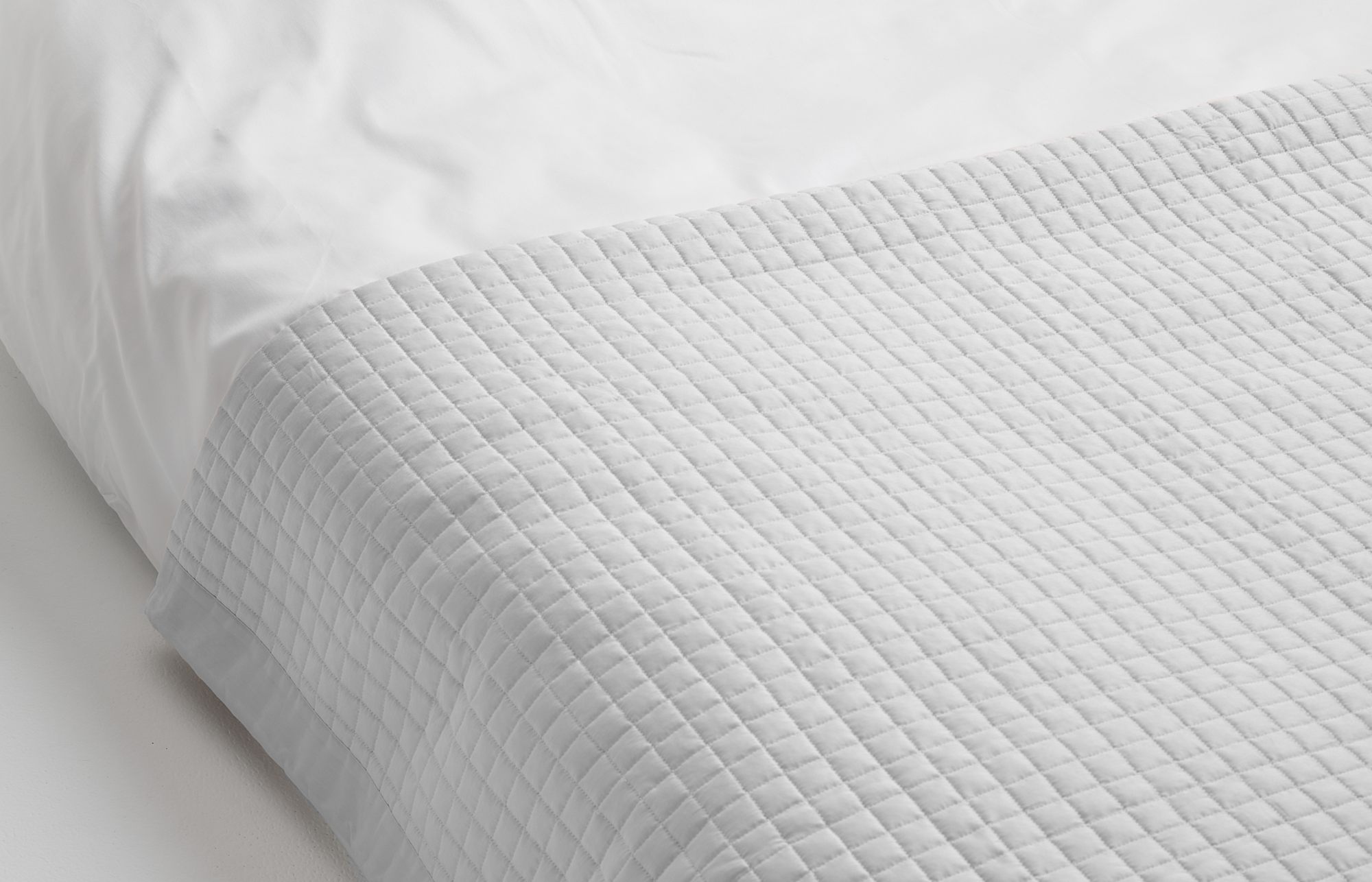
A made bed has a special ability to change the rhythm of the entire room. A bedspread for the bedroom covers the morning trace of sleep, but its role is much more interesting: it connects the color of the walls, curtains, and bedding, giving the bedroom a finished, calm expression. It's a layer that can be subtle like a well-tailored jacket, or become the main accent of the room.
When choosing, it's not worth relying only on a photograph. The proportions of the bed, how you use the bedroom, the light in the room, and whether you want to meticulously smooth the bedspread every day or just casually throw it over the duvet all play a role. A well-chosen piece looks natural, not like an extra decoration.
How to choose a bedspread for the bedroom
Start with the mattress size, not the size of the duvet itself. The bedspread should extend beyond the sides of the mattress so that the bed doesn't look optically short or unfinished. For a low frame, the hem can reach almost to the floor; for a bed with a prominent headboard or legs, it's nice to leave the structure slightly visible.
For a single bed, a bedspread approximately 140 to 180 cm wide usually works well. For a classic double bed, a comfortable width is around 220 to 240 cm, while for a wider bed, it's worth considering 260 cm or more. The length depends on whether the bedspread is meant to cover the bed from head to foot, or just create a layer over two-thirds of the bed.
The bed's design is also important. If you have a high mattress, a topper, and a voluminous duvet, a bedspread that is too small will easily get lost. Conversely, a low bed with a thin duvet can handle a more subtle model. Before you start choosing, measure the width, length, and height of your mattress. Those few minutes often determine whether the result will look well-thought-out.
Full coverage, or just at the foot?
A full-coverage bedspread is a good choice for those who like visual calm. It covers the bedding, protects it from dust during the day, and in a smaller bedroom, helps to quiet down the amount of colors and patterns. It stands out especially on a bed that is the dominant feature of the room.
A narrower bedspread placed over the bottom third of the bed works differently. It allows the bedding to stand out and adds texture without covering everything else. It's practical when you just want to pull back one light layer in the evening, or when you like to change the look of your bedroom according to the season. On white or plain bedding, this detail can be what creates the entire composition.
Material determines the bedroom's feel
The bedspread touches the bed less than the bedding, yet you perceive the material with your eyes and hands every day. It's not just about warmth. The fabric's surface interacts with light, creates shadows, and determines whether the bedroom will feel airy, cozy, or more austere.
A cotton bedspread in a plain weave is versatile and easy to combine. It has a clean, matte look and is suitable for bedrooms where natural wood, ceramics, or linen curtains prevail. Quilted cotton adds a subtle volume to the bed without necessarily looking heavy. It's particularly pleasant when you also use the bedspread as a light evening layer when reading.
A quilted decorative bedspread in subtle colors can complement the overall visual of the bedroom. Timeless colors beautifully complement many shades of bedding without competing with each other. It fits perfectly on any bed and, with its size of 240 × 220 cm, can easily handle even a larger bed.
When purchasing, also pay attention to the composition and care instructions. Natural fibers have their specific feel and appearance, while blends can bring greater dimensional stability or easier care. There isn't one correct material. It depends on whether you're looking for a casual everyday layer or a striking element for a bedroom you want to make up to the last crease.
Color doesn't have to match the bedding
The safest path leads through tone-on-tone. For cream bedding, choose a sand, oatmeal, or light caramel bedspread. For gray, smoky, slate, or muted blue works well. Such layering doesn't look flat if the individual textiles have different weaves or textures.
Contrast also works, it just needs support from other details. A dark green bedspread on a light bed can connect to a vase, a picture, or the leaves of a houseplant. Terracotta will add warmth to a room with light wood. Black or anthracite are graphic and elegant, but in a small bedroom, balance them with light sheets, walls, or lamps.
Use patterns sparingly. If the bedding already has stripes, a floral motif, or a prominent check, keep the bedspread plain. If, on the other hand, the bedding is calm, the bedspread can bring a subtle relief, quilting, or an inconspicuous woven design. A well-made bed doesn't need many strong motifs. It needs the materials and shades to work together.
Pillows as the final layer
Decorative pillows can support the bedspread, but they don't have to turn the bed into an exhibition scene. Two larger pillows in front of the sleeping pillows and one smaller accent are often enough. If the bedspread has a prominent texture, opt for smoother pillowcases. For a smooth bedspread, boucle, linen, or a gently quilted surface works nicely.
Also think about the evening moment. All decorative pillows will need to be put away somewhere, so it's better to choose a number that truly fits into your daily routine. The style of the bedroom should support rest, not add another small chore.
Layering according to the season and light
In summer, lighter bedspreads with a breathable structure and colors that reflect daylight work best: white, ivory, light gray, sage, or faded blue. Even if they cover the bed during the day, in the evening you can easily fold them to the end of the mattress and use them as a light blanket with an open window.
In the colder part of the year, the bedroom can afford more substance. Quilting, waffle texture, darker neutral tones, and deeper shades create a sense of coziness without the need to change the entire interior. Especially in a north-facing bedroom, a warm beige or tobacco tone can do more than other decorations on a shelf.
Notice how the bedspread looks in the morning and evening. A color that looks subtle in an e-shop may take on a sharper character in direct southern light. Conversely, in a darker room, some gray and blue shades can easily get lost. If in doubt, choose based on fabric samples, floor color, and light in your space, not just a single product photo.
To keep the bedspread beautiful in everyday use
A bedspread doesn't have to be untouchable. On the contrary – it works best when it's part of a daily ritual. In the morning, shake it out, straighten the corners, and let the bed air out for a few minutes before covering it. This maintains the fresh feeling of the bed and the tidy appearance of the bedroom.
Always adjust maintenance to the specific material and manufacturer's label. Finer fabrics will appreciate a gentle program and plenty of space in the drum to avoid unnecessary creasing. For structured or quilted bedspreads, drying them flat or evenly hung helps the filling and shape settle back into place.
A bedspread isn't just the final touch after making the bed. It's an invitation to return in the evening to a space that feels quiet, personal, and pleasantly lived-in. Choose one that will match not only the color of your bedroom, but also how you want to relax in it every day.
Sdílet:
What is a good weight for a quality bath towel and why?